
Blog
Improve Your English Fast for Work
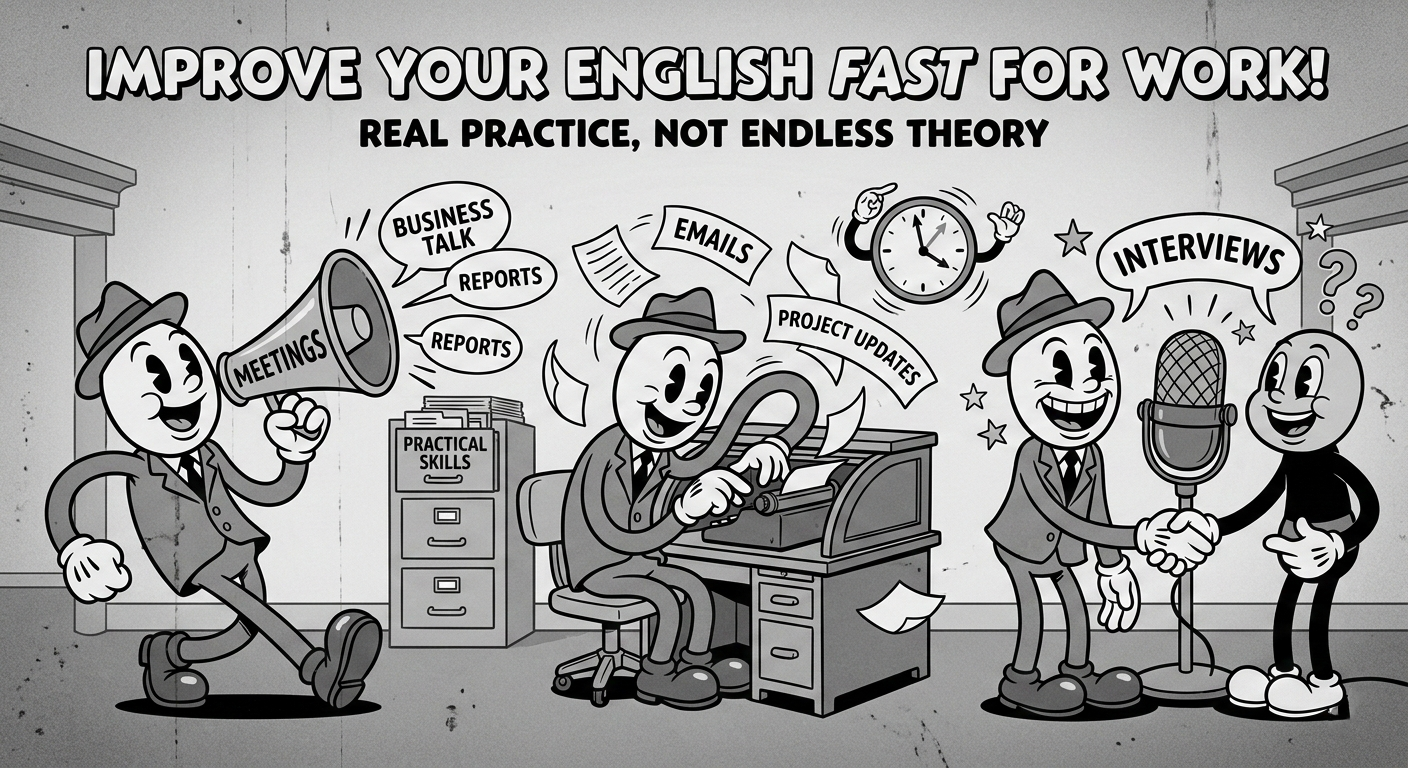
A practical routine that upgrades your work English with real practice: meetings, emails, and interviews — not endless theory.
Quick answer
The fastest way to improve your work English is to stop studying grammar and start producing output: short daily speaking drills, reusable phrase templates for meetings and emails, and spaced review of the 20–30 phrases you use most. Replace the vague goal of "learn English" with a specific situation you need to handle — one meeting type, one email format, one interview question — and practice that scenario until it feels automatic.
How to Set a Specific Work English Goal
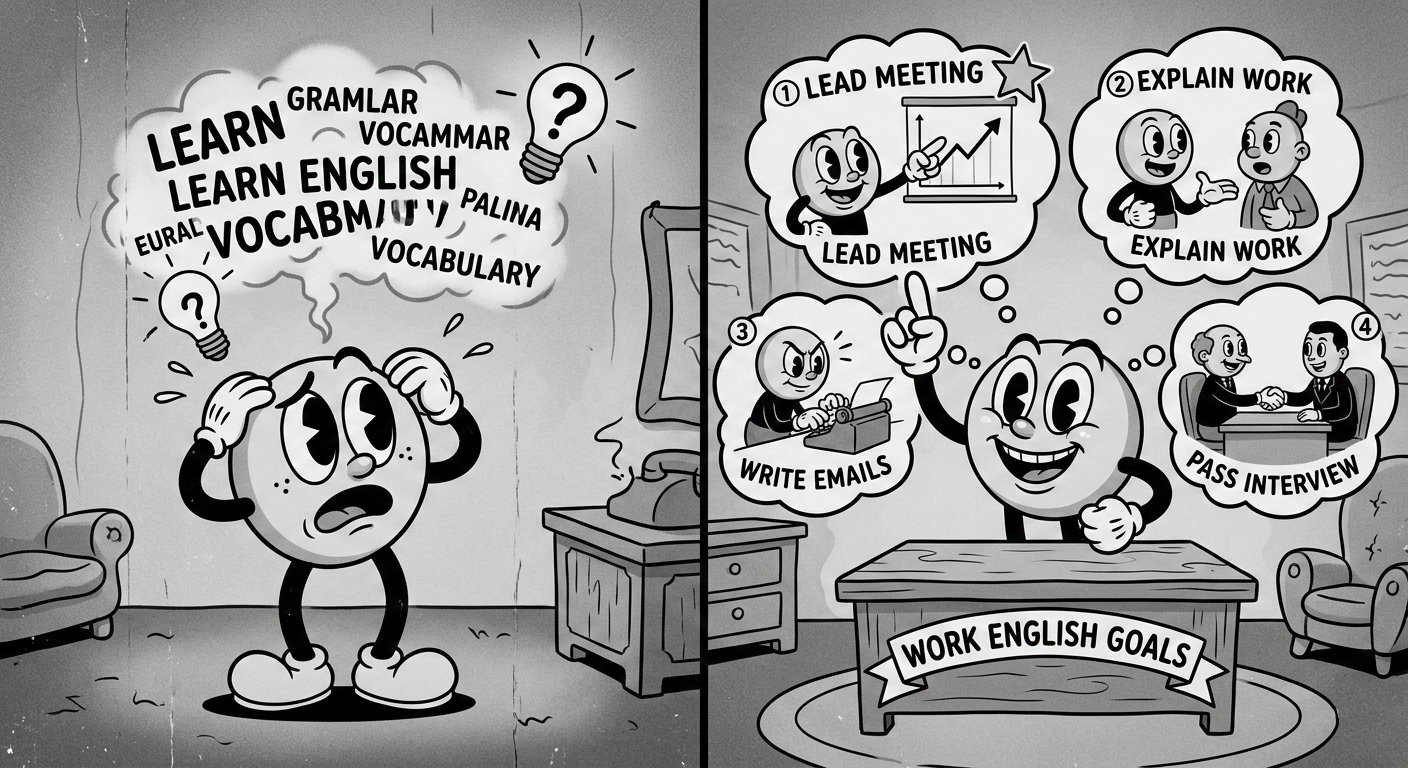
A goal like "learn English" is too vague to plan. Replace it with 1–3 concrete situations you want to handle well: lead a meeting, explain your work, write clear emails, or pass an interview.
Your learning plan should match your real output. If you need meetings, you train speaking and listening. If you need email, you train writing and templates.
Match your learning to your real output — if you need meetings, train speaking and listening, not grammar rules.
- Pick 1 main scenario (the most urgent).
- Define a success example ("I can explain my project in 2 minutes").
- Write down 10 phrases you wish you had during that scenario.
How to Build a Daily English Practice Routine for Your Job
Do short daily input instead of long random sessions. Choose content related to your work so vocabulary repeats naturally.
Aim for 20–30 minutes: listen first, then read the transcript (or article), and collect phrases you can reuse at work.
- Listen to 5–10 minutes, twice (same piece).
- Save 5 useful phrases, not 50 new words.
- Use examples you can copy into your own messages.
Why Daily Speaking Practice Beats Studying Grammar
You can understand a lot and still freeze when you need to speak. The fix is consistent low-pressure speaking — every day if possible.
Do not wait until you "feel ready". Start with short, repeatable formats and gradually increase difficulty.
Consistent daily speaking beats one perfect session per week. Start small and keep the streak.
- 2 minutes: explain what you did today at work.
- 2 minutes: summarize an article/video you consumed.
- 2 minutes: answer one common interview question.
- Record yourself once a week and compare progress.
How to Build an English Phrasebook for Work
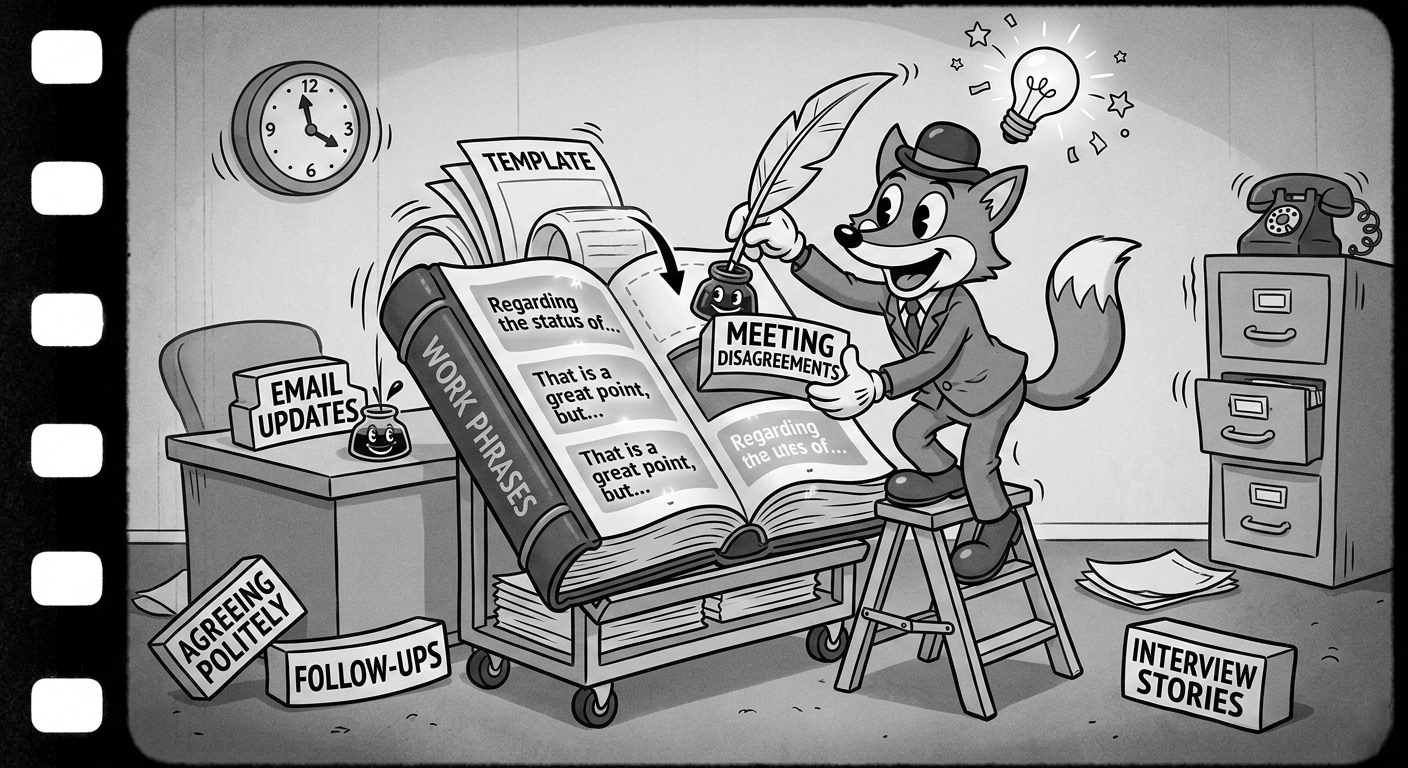
Most work communication repeats: updates, questions, deadlines, clarifications. Create templates and reuse them until they become automatic.
This gives you confidence fast because you stop improvising from zero every time.
- Email templates: status update, request, follow-up, apology/clarification.
- Meeting phrases: agreeing, disagreeing politely, asking to repeat, summarizing decisions.
- Interview phrases: strengths, challenges, achievements, problem-solving stories.
How to Review English Phrases Without Cramming
Cramming feels productive, but it fades quickly. Use short spaced reviews so phrases stay available when you need them.
A simple rhythm is enough: review after 1 day, 3 days, and 7 days — then use the phrase in your next speaking/writing session.
Review phrases in full sentence context, not single words — that's what makes them stick under pressure.
- Keep reviews under 5–7 minutes.
- Review phrases in context (full sentence), not single words.
- If you can't recall it, rewrite it and say it out loud once.
Build your personal plan
Ready to practice Work English?
Get a step-by-step learning route tailored to your level — with quizzes and hands-on tasks, not just theory.